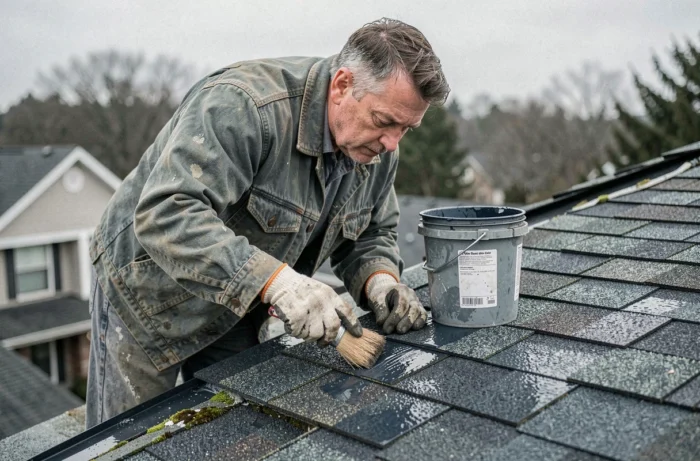
Shingle, or bitumen shingle, is a roofing material made of felt or fiberglass saturated with bitumen, covered with mineral granules. Its durability directly depends on the quality of the waterproofing implemented during installation and the maintenance applied over the years. Understanding the structure of this material allows for the right treatments to be chosen and helps avoid mistakes that shorten its lifespan.
Minimum slope and water drainage on shingle roofing
Before discussing waterproofing products or resins, the first condition for durable waterproofing concerns the slope of the roof. An insufficient slope causes water to stagnate on the surface, and no treatment will permanently compensate for this structural flaw.
A installation guide published by Polymars in September 2026 specifies that you need at least a 20% slope to ensure proper drainage with bitumen shingles. Below this threshold, water stagnates between the overlaps, accelerates the degradation of the bitumen, and eventually infiltrates beneath the covering.
If your roof has a low slope, adding a waterproofing treatment will not be enough to compensate for the problem. In this case, installing a self-adhesive bitumen underlayment beneath the shingles serves as a secondary barrier against infiltrations. This underlayment is not an accessory: it becomes the real line of defense in case of lifting or cracking of the shingle.
To delve deeper into the techniques suitable for this type of covering, you can read the article on the Conseils Habitat website that details the implementation steps.
Self-adhesive bitumen underlayment: the barrier that surface treatment cannot replace
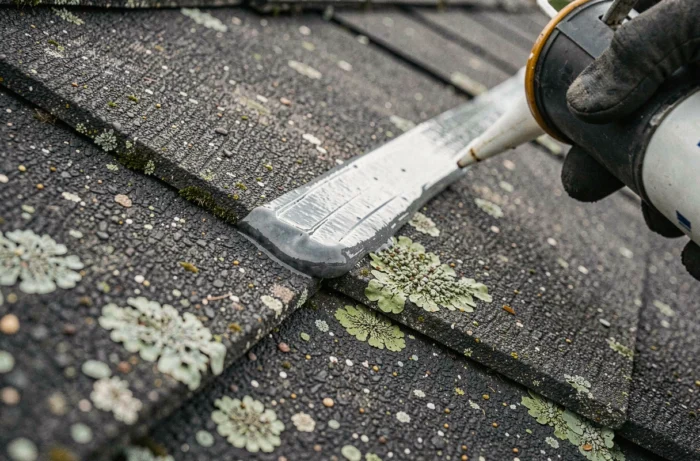
Most guides focus on choosing the waterproofing agent to apply on the surface. This approach overlooks a crucial technical element: the self-adhesive bitumen underlayment installed before the shingles. It acts as a secondary waterproofing membrane, particularly effective in areas of junctions, valleys, and roof edges.
According to a technical analysis reported by Toitures Niko, the National Building Code 2020 (Canada, article 9.26.5.3) mandates this self-adhesive waterproof barrier at the roof edge in frost-prone regions. The principle remains relevant in our climates: freeze-thaw cycles weaken the joints between shingles and create entry points for water.
On an existing roof, this underlayment can no longer be added without removing the shingles. That’s why it should be considered right from the initial installation or during a complete shingle replacement. Considering this step as optional means giving up the most effective long-term protection against infiltrations.
Choosing a suitable waterproofing agent for bitumen shingles
Once the roof structure is properly prepared (sufficient slope, underlayment in place), the surface treatment extends the shingle’s resistance to the elements. Not all waterproofing agents are suitable for bitumen shingles, and an incompatible product can degrade the bitumen instead of protecting it.
There are two main categories available on the market:
- The film-forming waterproofing creates a film on the surface that blocks water penetration. It offers immediate protection but can trap residual moisture if the substrate is not perfectly dry before application.
- The breathable waterproofing (or beading effect) penetrates the material and allows water vapor to escape. It is generally better suited for bitumen shingles, as it prevents delamination associated with trapped condensation under the film.
- Bitumen resins, used for spot repairs, mainly serve to seal localized cracks. They do not replace a comprehensive waterproofing treatment across the entire covering.
For shingles, a breathable waterproofing agent remains the safest choice in most cases. Bitumen needs to breathe to maintain its flexibility. A rigid waterproof film accelerates the aging of the shingle due to the accumulation of micro-condensation.
Application conditions and mistakes to avoid during treatment
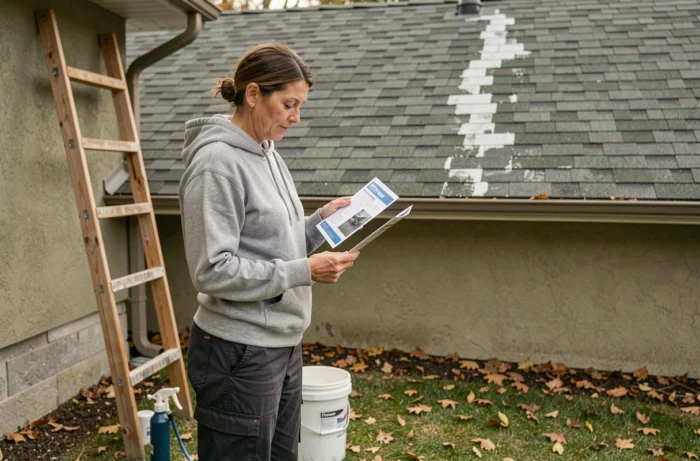
Applying a waterproofing agent on poorly prepared shingles or in bad weather renders the treatment ineffective, even counterproductive. Several conditions must be met before starting work.
The ideal period is in spring or autumn, when temperatures remain mild without the risk of overnight frost. Weather forecasts should be checked: no rain should fall in the hours following application, as it would dilute the product before it penetrates the substrate.
Before any application, the surface must be thoroughly cleaned. Moss, lichens, and pollution deposits clog the pores of the shingle and prevent the waterproofing from penetrating properly. A low-pressure cleaning (never high pressure on shingles, which would strip the protective granules) followed by a complete drying time is the sequence to follow.
The most common mistakes:
- Applying the waterproofing agent on damp shingles or after a quick rinse, without allowing the substrate to dry for several days of good weather.
- Using a high-pressure cleaner that destroys the layer of mineral granules, accelerating the degradation of the shingle instead of protecting it.
- Neglecting the prior inspection of lifted, cracked, or missing shingles. A waterproofing treatment has no effect on a shingle that is already structurally damaged.
A cracked or detached shingle must be repaired or replaced before treatment. Applying a waterproofing agent over a mechanical defect is like painting over rust.
The frequency of renewing the treatment depends on the product used and the exposure of the roof. A well-applied breathable waterproofing agent protects for several years, but an annual visual inspection remains the best indicator: as soon as water no longer beads on the surface, it is time to renew the application.