When looking for an organic cotton onesie in newborn size, you come across dozens of brands that display the word “ethical” without any verifiable certification behind it. The problem is not the lack of supply, but the absence of reliable benchmarks for sorting. This guide sets out concrete criteria for making responsible choices for baby, from textiles to toys, incorporating the latest European regulatory constraints.
PFAS and endocrine disruptors: what the European regulation changes in 2026
We start here because it is the most objective filter. The new European regulation on toy safety, which came into effect in 2026, expands chemical bans to endocrine disruptors and explicitly targets PFAS in toys and childcare articles.
On the textile side, the European restriction on PFHxA now applies to clothing, shoes, and accessories with a phased timeline starting in 2026. PFHxA is a substitute for older PFAS, often used in water-repellent treatments for children’s clothing.
In France, the ban on PFAS in textile articles is also progressing at the national level. Levels deemed “concerning” have been found in children’s clothing sold in France, according to an investigation reported by Geo.fr. You can find out everything about bebe-ethique.fr to identify brands that anticipate these standards rather than simply complying at the last moment.
When buying a raincoat, a laminated bib, or a stain-treated cuddly toy, checking for the absence of PFAS becomes a more reliable reflex than the word “natural” on the label.

Organic baby clothes: labels to check before purchasing
A onesie labeled “organic cotton” guarantees nothing about dyes, finishing treatments, or manufacturing conditions. It is the complete certification of the production chain that makes the difference.
Textile labels that cover the entire chain
- GOTS (Global Organic Textile Standard) certifies organic fiber, but also dyeing processes, chemical residues, and social production conditions. It is the most comprehensive standard for baby textiles.
- Oeko-Tex Standard 100, product class I (for babies), tests the finished product against a list of harmful substances. It does not guarantee that the fiber is organic, but it checks what remains in the fabric in contact with the skin.
- The OETI label, the founding body of Oeko-Tex, also addresses PFAS testing in textiles, which takes on increased relevance with the regulatory tightening of 2026.
There is no need to accumulate all the labels. A GOTS certified garment already covers the majority of risks. However, a product without any verifiable certification does not deserve the label “ethical”, even if the brand communicates its values.
Second-hand: the most responsible choice is the one you don’t buy new
A baby wears a size for just a few weeks. Second-hand clothing in good condition has already undergone several washes, which has reduced any potential chemical residues. It is both an economical and ecological option, provided you check the condition of the snaps, seams, and elastics.
Diapers, cosmetics, and toys: sorting by risk level
You can’t buy everything organic and made in France, especially on a tight budget. The practical approach is to prioritize products that remain in contact with the skin for the longest time.
Diapers: the priority area to monitor
A baby wears a diaper continuously during their early years. Recent surveys point to the presence of phthalates and PFAS in certain disposable diapers. Diapers labeled chlorine-free, fragrance-free, and dermatologically tested constitute a first filter. Washable diapers eliminate the issue of added substances, but feedback on this point varies depending on the model and maintenance adopted.
Baby cosmetics: fewer products, better chosen
A liniment, a superfat soap, a diaper cream: three products are enough for daily care. Multiplying references increases exposure to problematic substances. Favoring organic cosmetics with a short ingredient list remains the simplest method to limit risks.
Toys: the new regulatory landscape
The 2026 European regulation on toy safety changes the game by banning new categories of substances. For plastic toys, choosing European manufacturers subject to these standards significantly reduces exposure. Raw untreated wooden toys, certified fabric toys, or natural rubber toys remain solid alternatives.
Packaging and online purchases: an often-overlooked angle
The European regulation on packaging and packaging waste (PPWR), applicable since 2026, imposes direct requirements on packaging compliance, including for products sold online. For baby items sold with food or cosmetic packaging, this means that the packaging itself can be a source of contact with undesirable substances.
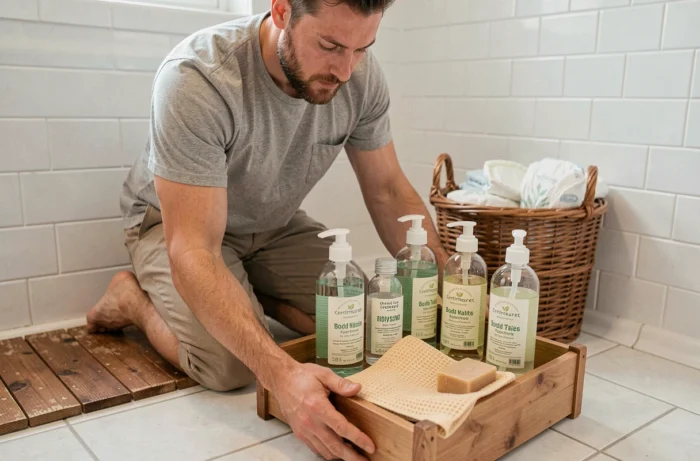
In practice, when ordering cosmetics or baby food online, checking that the seller complies with PPWR obligations is not straightforward. The most accessible reflex remains to favor brands that communicate about the composition of their packaging or that use glass, untreated cardboard, or refills.
Buying in bulk or from specialized stores also helps reduce the layer of packaging between the product and the child’s skin, which remains the most direct action.
Ethical choices for baby do not require a complete overhaul of purchasing habits. Starting with diapers and textiles that are in direct contact with the skin, checking certifications rather than marketing claims, and incorporating second-hand items into your routine is already a solid foundation for limiting exposure to risky substances.