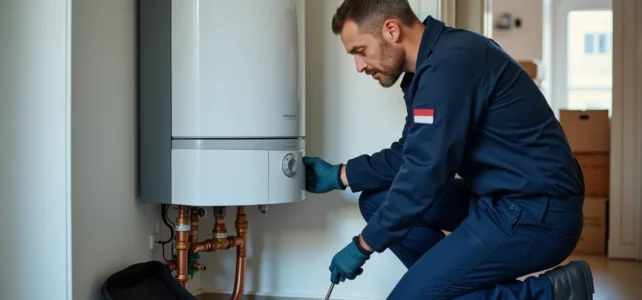
A Brussels tenant who restarts their oil boiler in early October after six months of inactivity discovers a leak at the burner. The technician finds a dried-out seal and combustion residues accumulated since the previous season. The result: an emergency intervention, extra costs, and several days without heating. This scenario repeats every year in dozens of households in Brussels, and it is almost always avoidable.
Energy Performance Certificate and home insurance: what a missed maintenance means in Brussels
In Brussels, the periodic inspection of the boiler is not just about comfort. It is directly linked to the energy performance requirements of buildings (PEB). A delayed maintenance can complicate obtaining or maintaining the PEB certificate, which affects the rental or resale value of the property, especially in municipalities where energy renovation policies have tightened since 2024.
Related reading : XXL Size in Numbers for Women: Guide to Measurements and Exact Equivalents
The connection with home insurance is even less known. Without a compliant maintenance certificate, some insurers may refuse to fully compensate in the event of a heating-related incident (fire, carbon monoxide poisoning). The lack of maintenance is then considered negligence on the part of the owner or occupant.
It is easier to understand why boiler maintenance before winter in Brussels goes beyond a mere administrative formality. It is a link between safety, financial coverage, and the energy compliance of the building.
Further reading : How to Choose the Best Hairdresser for Color and Highlights in Capbreton

Gas or oil boiler inspection in Brussels: what the technician really checks
We often imagine a simple vacuuming of the heating body. In reality, a regulatory maintenance covers a much broader scope, and the type of fuel changes the game.
Gas boiler: combustion and safety
The certified technician measures combustion emissions, checks the gas circuit’s tightness, and verifies the proper functioning of safety devices (thermocouple, pressure switch). They clean the burner, inspect the heat exchanger, and adjust the water circuit pressure. Smoke analysis allows for detecting a poor adjustment that increases energy consumption without the occupant realizing it.
Oil boiler: residues and fouling
Oil produces more soot and residues than gas. The cleaning of the combustion chamber, burner, and flue is more thorough. The oil filter is replaced, and the nozzle is inspected. Unaddressed fouling significantly reduces the system’s efficiency and increases pollutant emissions.
In both cases, the technician issues a maintenance certificate. This document is what the insurer or PEB certifier may require.
Heating system optimization: going beyond legal checks
Brussels Environment and Homegrade Brussels recommend taking advantage of the maintenance to optimize the entire heating system, not just the boiler. This holistic approach makes a real difference in the energy bill and thermal comfort.
Here are the actions to combine with the technician’s visit:
- Purge each radiator to release trapped air in the circuit, which reduces heat distribution and forces the boiler to run longer.
- Check the heating circuit pressure (often indicated by a manometer on the boiler). Too low or too high pressure degrades the system’s performance.
- Clear heat emitters: a radiator blocked by furniture or a thick curtain loses a significant part of its efficiency.
- Check the condition of the thermostatic valves and room thermostat to ensure that temperature regulation works correctly.
These operations take only a few minutes each. Combined with professional boiler maintenance, they allow for concrete energy consumption reduction without additional investment.
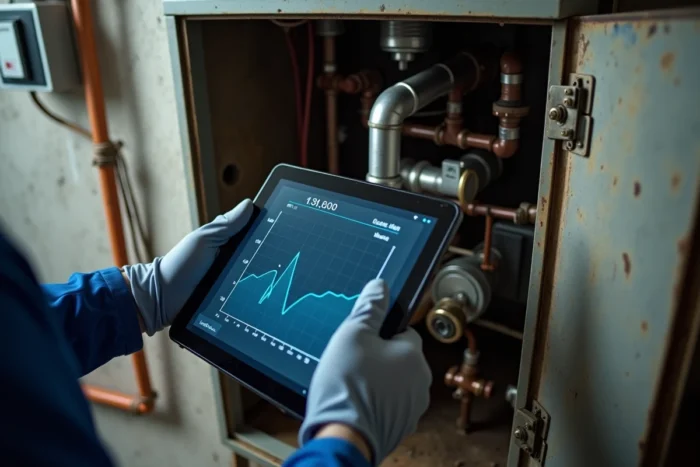
Scheduling maintenance in Brussels: the game-changing window
Feedback varies on this point, but a clear trend emerges: owners who call a technician between April and September get appointments more quickly and at more flexible times. In mid-winter, heating technicians prioritize urgent repairs, and delays increase.
Waiting until October or November to schedule maintenance risks starting the heating season with an unchecked boiler. In case of a breakdown upon restart, the situation becomes doubly penalizing: no heating and a technician hard to mobilize.
Here are a few points to anticipate before the technician’s visit:
- Check the date of the last maintenance on the previous certificate (the inspection must be annual).
- Clear access to the boiler, gas meter, or oil tank.
- Inform the technician of any unusual noises, temperature variations, or odors detected during the previous season.
A maintenance scheduled outside the heating season is shorter and better performed, because the technician is not working under pressure.
Owner and tenant responsibilities: who pays for what in Brussels
In the Brussels Region, the responsibility for routine boiler maintenance generally falls to the tenant. The replacement of the unit or major repairs (heat exchanger, heating body) remains the owner’s responsibility.
This division sometimes creates unclear situations. A tenant who neglects annual maintenance exposes the owner to a lack of PEB certificate. Conversely, an owner who does not provide a functioning installation complicates the tenant’s task.
The lease must clearly specify who is responsible for annual maintenance and the retention of the certificate. In the event of a claim, this document determines each party’s responsibility towards the insurer.
The best protection remains documented maintenance, carried out by a certified technician, with a certificate kept throughout the lease term. This simple reflex avoids disputes and ensures that the property remains compliant with Brussels energy requirements.