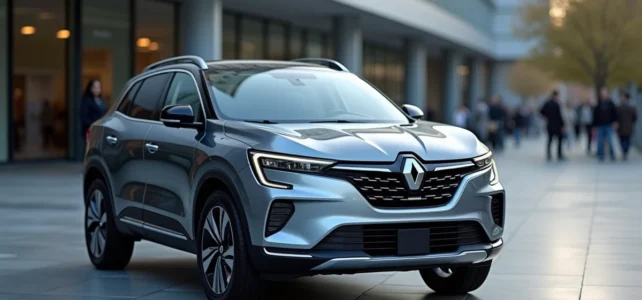
The Renault Symbioz offers a palette of seven shades, but two of them account for most of the hesitations among buyers: the storm gray, a pearlescent finish with changing reflections, and the star black, a classic metallic black with a deep effect. These two colors share a sober and enhancing positioning, making the choice less obvious than it seems at first glance on the Renault configurator.
Pearlescent paint versus metallic: a technical difference that impacts daily life
The storm gray of the Symbioz is a pearlescent shade. This means that the paint incorporates mica pigments that create multidirectional reflections depending on the lighting. The star black, on the other hand, is a metallic shade: the aluminum particles in the varnish produce a more uniform shine, less variable.
Read also : How to Choose the Best Hairdresser for Color and Highlights in Capbreton
This distinction has direct consequences on maintenance. Initial field reports on the Symbioz confirm that storm gray hides micro-scratches and dust better than a dark shade. Between washes, a pearlescent gray remains visually clean longer than a deep black, on which every water mark, every gravel impact, and every wash swirl become visible in bright sunlight.
For those who wish to delve deeper into the comparative aging of storm gray or star black on Renault Symbioz, the available data converge on a simple observation: black requires significantly more cosmetic attention to maintain its new appearance.
Read also : 125cc Scooter for the Highway: How to Choose the Ideal Model for Your Commutes?
In contrast, the pearlescent paint of storm gray presents another issue. In the event of bodywork touch-ups after a bump, the pearlescent shade is more difficult to reproduce exactly than a classic metallic. Body shops must adjust the mica pigments to achieve the same reflection, complicating localized repairs and potentially resulting in visible color discrepancies if the work is not performed by a properly equipped professional.
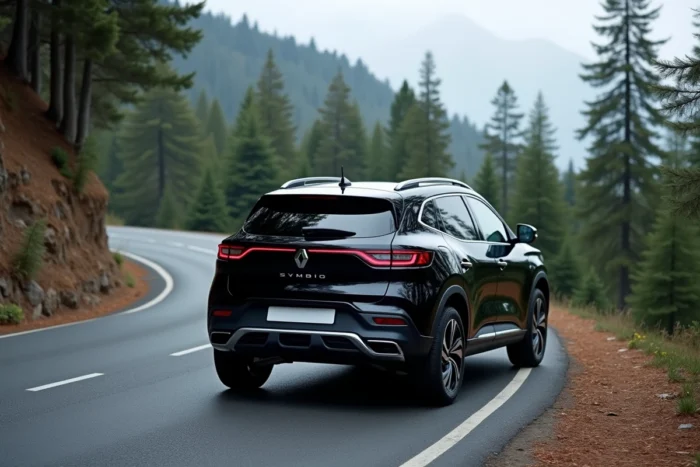
Star black on Renault Symbioz: the trap of visual prestige
Star black attracts with its prestigious appearance. On the lines of the Symbioz, especially with the Esprit Alpine finish and its contrasting roof, the look is flattering in the showroom or in the configurator photos. Vehicle stock advertisements also emphasize this “prestige” aspect without mentioning the practical constraints.
Field reports differ on this point. Some owners of Symbioz and Rafale in star black report that the body shows maintenance defects within the first few weeks, even with careful washing. Swirl marks (circular scratches left by cloths or rollers) are the main complaint directed at black shades on these models.
To maintain a star black in decent condition, one should consider:
- A hand wash rather than an automatic station, to limit brushing micro-scratches
- Regular application of wax or a ceramic treatment to protect the varnish
- A corrective polish at least once a year if the vehicle is parked outdoors
The aesthetic maintenance cost of a star black exceeds that of a storm gray over the vehicle’s ownership period. This extra cost does not appear on any Renault pricing grid, but it significantly impacts the annual budget.
Resale value and depreciation: which color best protects your Symbioz
In the used car market, neutral shades like gray and black generally resell well. The available data do not allow for a conclusion about a marked depreciation gap between storm gray and star black on the Symbioz, as the model is still relatively new in the French market.
Some contextual elements deserve attention. Star black is sometimes included at no extra cost on certain configurations of the Symbioz, while storm gray, being a pearlescent shade, is charged as an option. This price differential at purchase can influence the perceived value at resale: a used car buyer may not necessarily pay more for a color that cost more to the first owner.
Conversely, a storm gray in good condition after several years of use sends a positive signal about the overall maintenance of the vehicle. A star black covered in micro-scratches, even if the rest of the car is impeccable, gives an impression of neglect that can lower the transaction price.
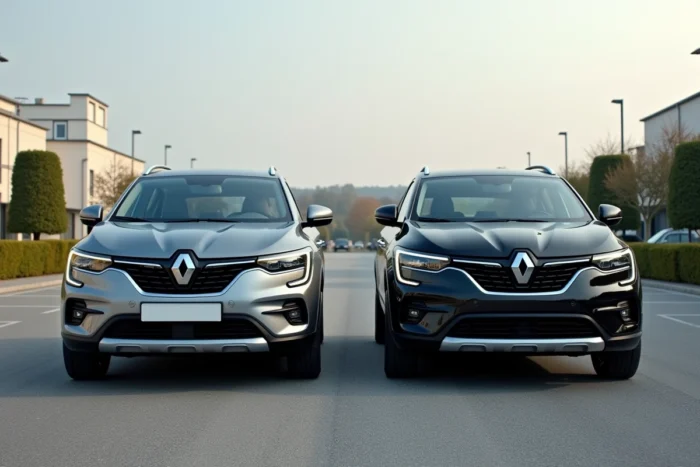
Storm gray and Symbioz finishes: combinations to know
The rendering of a color also depends on the chosen finish. On the Symbioz, four trim levels coexist, and not all shades are available everywhere. Storm gray pairs particularly well with the wheels and chrome inserts of the Techno and Iconic trims, where the pearlescent reflections of the gray resonate with the body details.
Star black, for its part, comes into its own on the Esprit Alpine finish, which features a contrasting black roof. On this version, the black roof blends into the black body, eliminating the two-tone effect and giving a more monolithic silhouette. Some buyers believe this diminishes part of the aesthetic interest of the Esprit Alpine finish.
For a Symbioz E-Tech full hybrid, storm gray with a contrasting black roof likely offers the most striking visual contrast in the catalog. The two-tone effect works visually because the light pearlescent gray contrasts with the black of the roof, whereas this contrast disappears on a star black.
Summary of selection criteria
- Frequent urban use, outdoor parking: storm gray tolerates dust and small everyday defects better
- Regular hand washing and a taste for a polished aesthetic: star black rewards the effort with a deep finish
- Esprit Alpine finish with contrasting roof: storm gray better exploits the two-tone effect
- Limited maintenance budget: storm gray requires less cosmetic care over time
The choice between these two shades of the Symbioz is less about personal taste and more about usage. A buyer who parks in a garage and washes their vehicle by hand every week will fully enjoy the star black. For all other scenarios, storm gray remains the most rational choice over the vehicle’s lifespan.