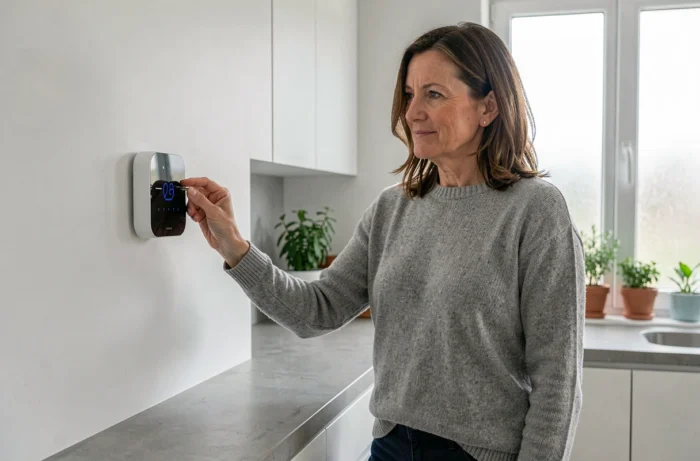
Your phone turns on the living room light, the thermostat adjusts the temperature during the night, and a notification alerts you when someone rings the doorbell. These actions, now commonplace for some households, rely on rapidly evolving technologies. Transforming your home into a smart habitat is no longer just about stacking connected devices: the choice of the technical foundation determines everything else.
Matter Protocol and Hub-First Architecture: The Foundation of a Reliable Smart Habitat
Before choosing a smart bulb or lock, it’s essential to understand how devices communicate with each other. That’s the role of the protocol. Matter, launched to unify home automation, promised that a certified device would work with any assistant (Google Home, Alexa, Apple HomeKit). In practice, the situation is more nuanced.
Recent feedback shows a persistent fragmentation between Thread ecosystems and Matter “fabrics”. A household mixing several brands of border routers and controllers may still encounter orchestration issues. The device is certified Matter, but its behavior varies depending on the assistant controlling it.
To avoid these disappointments, specialized guides from 2026 recommend a “hub-first” approach: start with a central hub compatible with Matter, then add devices one by one. This logic simplifies troubleshooting and ensures that each device passes through a single control point. The solutions available on domotica.fr illustrate this centralized approach well, where the hub structures the entire installation.
Are you torn between Thread and Zigbee for your sensors? Thread remains a prerequisite for some recent devices, while Zigbee maintains a very large installed base. A good hub manages both.
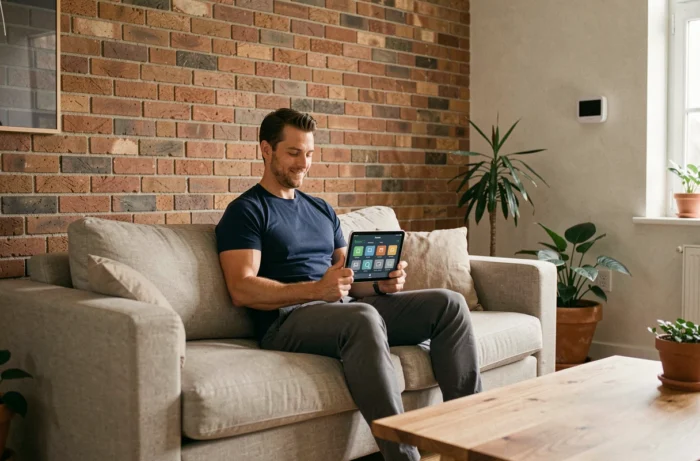
Cyber Resilience Act: What European Regulation Changes for Your Connected Devices
The security of connected home devices no longer solely depends on the manufacturer. Since September 11, 2026, the Cyber Resilience Act of the European Union imposes new obligations on manufacturers of connected products. Smart locks, security cameras, and baby monitors are explicitly listed among the products subject to enhanced requirements.
In practice, manufacturers must report exploited vulnerabilities and serious incidents via a dedicated platform, with very short notification deadlines. This framework goes beyond GDPR, which protects personal data but does not cover the technical robustness of devices.
What does this mean for you in your daily life? Two things:
- Devices sold in Europe must receive security updates throughout their declared lifespan, reducing the risk of software obsolescence on your cameras or detectors
- Non-compliant products can be removed from the market, pushing brands to invest in reliability rather than marketing
- When purchasing, checking for compliance with the Cyber Resilience Act becomes as relevant a selection criterion as Matter compatibility
This regulation strengthens trust in the installation of connected security equipment, a common barrier for households hesitant to take the plunge.
Local Processing Without Cloud: The Trend Changing Your Home’s Responsiveness
A roller shutter that takes three seconds to respond after a voice command often indicates that the order is routed through a remote server. Manufacturers’ announcements in 2026 confirm a strong trend: local processing of commands, without reliance on the cloud.
The principle is simple. Instead of sending each instruction over the internet for a server to process and send back the response, the home hub executes the command directly. The result: near-instant responsiveness, operation maintained even during internet outages, and less personal data circulating outside the home.
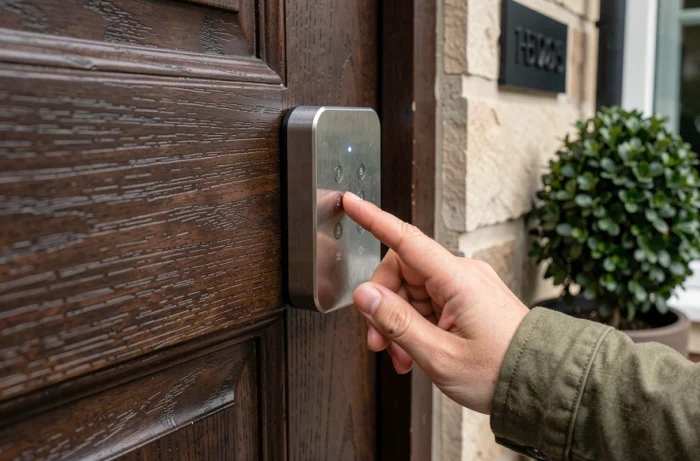
This local approach particularly benefits three types of equipment:
- Lighting systems, where a noticeable delay between command and activation hinders daily use
- Security automations (door locking, alarms), which must function even if the internet box is out of service
- Complex automation scenarios (closing shutters when light decreases and turning off heating simultaneously), which require rapid calculation time
A high-performance local hub makes the entire installation more responsive and resilient. This is a criterion often underestimated during the initial purchase but crucial over time.
Managed Energy: Reducing Electricity Consumption Through Home Automation
The comfort of a smart habitat is also measured by the energy bill. Current home automation solutions allow for precise control of electricity consumption, far beyond a simple programmable thermostat.
A connected thermostat learns your presence habits and adjusts heating accordingly. Coupled with window opening sensors, it automatically turns off the radiator when you ventilate. Cross-automation between sensors reduces waste without conscious effort.
Energy meters integrated into connected sockets help identify the most power-hungry devices. An old dryer or water heater can represent a significant portion of total consumption. By visualizing this data on an app, you make informed investment decisions: replace an outdated device or simply schedule its operation during off-peak hours.
Energy home automation is cost-effective when it relies on real consumption data, not on theoretical estimates. This is the difference between a gadget and a useful management tool.
The smart habitat market is structured around more mature protocols, stricter European regulations, and more reliable local architectures. Choosing a central hub compatible with Matter, checking compliance with the Cyber Resilience Act, and prioritizing local command processing: these three technical decisions determine the quality of the experience over several years.