
When excavating an archaeological site in Siberia and coming across woolly mammoth bones with cut marks, the temptation is great to directly blame prehistoric hunters. At another site, a few hundred kilometers away, the same bones appear without any human marks, buried in sediments that tell of a brutal warming. It is this contradiction in the field that has fueled the debate on the extinction of mammoths for over two centuries.
Genetic Decline on Wrangel Island: An Internal Vulnerability
Climate and hunting are the two most commonly cited factors to explain the disappearance of mammoths. A third mechanism, documented by genomic studies on the last mammoths of Wrangel Island (Russian Arctic), deserves equal attention.
See also : Discover the latest trends and practical tips for car enthusiasts
This small isolated population survived for several millennia after the extinction of continental mammoths. Genetic analyses show a strong genetic drift and an accumulation of deleterious mutations. In simple terms, with a population size too small, natural selection could no longer eliminate harmful variants.
This phenomenon is sometimes referred to as the “island syndrome.” Genetic diversity collapses, the ability to adapt decreases, and the slightest additional stress (an epidemic, a climatic event) can wipe out the population. To delve deeper into the reasons for the extinction of mammoths, this genetic dimension changes the usual interpretation of the case.
Read also : The best tips for easily choosing and maintaining your car
This intrinsic decline recalls well-known situations in current conservation biology: cheetahs, Tasmanian devils, or certain populations of Scandinavian wolves face comparable pressures. The difference is that for the Wrangel mammoths, no one was there to manage a breeding program.
Retreat of Cold Steppes and Transformation of the Woolly Mammoth’s Habitat
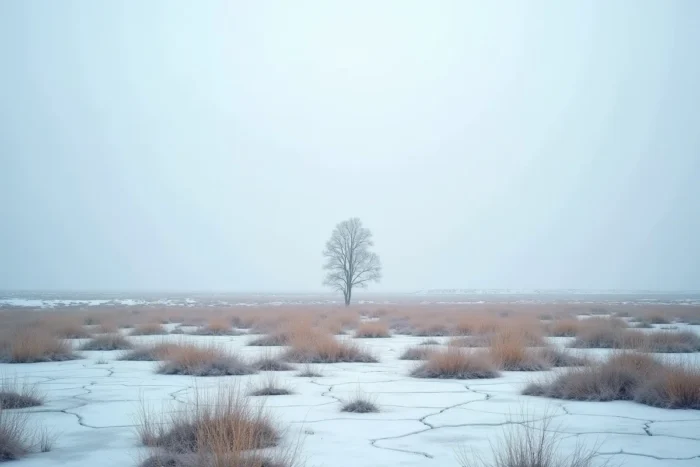
The woolly mammoth was a cold steppe animal, a biome that is now nearly extinct. These vast grassy and dry expanses covered a large part of Eurasia and North America during glacial periods. When the climate warmed at the end of the Pleistocene, the steppe gave way to wet tundra and boreal forest.
For a herbivore of this size, the difference is radical. The steppe offered abundant nutritious grasses. The marshy tundra and taiga do not provide the same quantity or quality of food.
A Habitat Collapse, Not Just Warming
The climatic factor is often reduced to “it got too hot for the mammoths.” The reality on the ground is more precise: it was the disappearance of their nourishing ecosystem that put them in difficulty. Warming did not kill the mammoths by heat; it eliminated their pantry.
Recent syntheses combining radiocarbon dating and vegetation modeling confirm that the retreat of the steppe precedes or coincides with the local extinction of mammoths in each studied territory. Computer models have simulated the extent of favorable habitat for mammoths at different periods, showing a drastic reduction in habitable area over the course of post-glacial warming.
Human Hunting Pressure: An Aggravating Factor with Variable Effects
Did humans finish off already weakened populations, or were they a minor factor in the face of the scale of climate change? Responses vary on this point depending on the continents and periods studied.
In Eurasia, the coexistence between humans and mammoths lasted several tens of thousands of years. Archaeological sites show regular exploitation (bones used as building material, worked ivory, butchery traces), but this hunting did not cause immediate extinction. Mammoth populations resisted as long as their habitat remained viable.
North America: A Tighter Chronology
The North American case is different. The arrival of the first humans on the continent closely coincides with the disappearance of the local megafauna. The window of coexistence was much shorter there than in Eurasia, making the hunting signal more visible in the fossil record.
This contrast between continents is a strong argument against single-factor explanations. If hunting alone had been sufficient, Eurasian mammoths would have disappeared long before. If climate alone were to blame, the isolated island populations of hunters should have thrived, yet those on Wrangel went extinct despite the absence of direct human pressure.

Extinction of Mammoths: Why No Single Cause is Sufficient
We now have three complementary frameworks to understand this extinction:
- The climatic and ecological factor: gradual disappearance of the cold steppe, replacement by biomes unsuitable for specialized large herbivores, reduction of viable habitat area over several millennia.
- The human pressure: direct hunting, competition for resources, disruption of migration corridors. Its intensity varies greatly by region and era, explaining very different extinction chronologies between Eurasia, North America, and Arctic islands.
- The genetic fragility of relict populations: genetic drift, accumulation of deleterious mutations, loss of adaptability in the last isolated populations like that of Wrangel Island.
These three mechanisms did not act sequentially but simultaneously, with different relative weights depending on the territory. It is this combination that makes the extinction of the woolly mammoth so difficult to summarize in one sentence.
The case of the mammoths remains a textbook example for conservation biology. It shows that a species adapted to a specific environment can collapse when that environment changes, even in the absence of a dominant predator, and that geographic isolation accelerates the extinction spiral instead of providing protection. The last mammoths of Wrangel are the clearest demonstration of this.