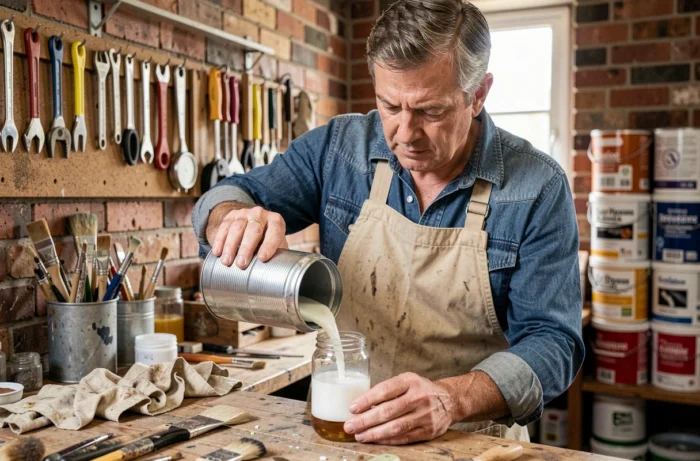
White spirit and acetone are found in almost all DIY workshops, but their interchangeability is a common trap. These two solvents operate under distinct chemical logics, with uses, safety constraints, and compatibility with paints that only partially overlap.
CLP Classification and Fire Risk: What European Regulation Requires
Before comparing performances, regulations already clarify certain situations. Acetone is classified as flammable liquid category 2 (H225) according to the CLP regulation (EC No. 1272/2008). White spirit, on the other hand, falls under category 3 (H226), with a significantly higher flash point.
In practice, this classification difference has direct consequences on storage and ventilation. A painting room using acetone in volume must adhere to stricter constraints: suitable safety cabinets, reduced volumes in the work area, enhanced air extraction.
For an individual, the risk remains proportional to the quantities handled. However, in a professional or semi-professional workshop, choosing between white spirit or acetone for painting also depends on the applicable regulatory framework for the premises.

White Spirit and Glycero Paint: Compatibility and Limits
White spirit is a petroleum distillate originally designed as a thinner and cleaner for oil paints (glycero-phthalic). It serves three functions with this type of paint: dilution before application, cleaning tools after use, and light degreasing of surfaces before painting.
In terms of dilution, its effectiveness is good. It easily incorporates into glycero paint without altering the film’s durability. For cleaning brushes and rollers, it remains the reference solvent.
Its main limitation concerns degreasing before painting. White spirit can leave a greasy residual film on certain surfaces, particularly plastics and smooth metals. Bodywork preparation guides now recommend preferring anti-silicone degreasers or isopropyl alcohol for this specific step.
Acrylic Paint: Is White Spirit Useful?
No. Acrylic paints (water-based) are diluted and cleaned with water. White spirit has no positive interaction with acrylic paint. Using it to clean a brush that has been used with acrylic is ineffective and wastes product.
Acetone and Paint: A Powerful but Aggressive Solvent
Acetone is a rapidly evaporating organic solvent. It dissolves a wide range of resins, making it extremely effective for stripping dried paint stains, cleaning surfaces before applying varnish, or removing nail polish (its most well-known domestic use).
For painting, its role focuses on two situations:
- Cleaning dried glycero paint or varnish stains, where white spirit alone is no longer sufficient
- Degreasing metal or glass surfaces before painting, thanks to its evaporation that leaves no greasy residue
- Stripping small areas of old paint on hard surfaces (tiles, metal)
Sensitive Surfaces: Possible Damage
Acetone attacks many plastics, dissolves certain rubbers, and can dull existing varnishes. On PVC, plexiglass, or well-maintained painted surfaces, it causes irreversible damage. White spirit, being less aggressive, is better suited for routine cleaning where the surface must remain intact.
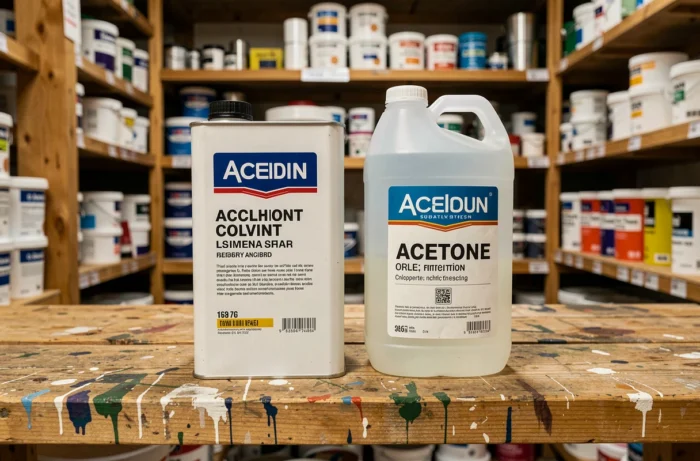
Comparison Table: White Spirit vs. Acetone by Use
| Use | White Spirit | Acetone |
|---|---|---|
| Dilute glycero paint | Suitable | Not recommended |
| Clean brushes (fresh glycero) | Suitable | Possible but oversized |
| Remove dried paint stain | Poorly effective | Very effective |
| Degrease before painting (metal) | Risk of residual film | Suitable, clean evaporation |
| Clean stained tiles | Effective on glycero | Effective on all types |
| Contact with plastics | Generally safe | Risk of dissolution |
Substitution with Less Harmful Alternatives
The trend in professional workshops is towards reducing these two solvents in favor of products with lower toxicological classifications. Aqueous degreasers and isopropyl alcohol are gradually replacing white spirit for surface preparation, particularly in bodywork and interior renovation.
For domestic painting work, switching to acrylic paints mechanically reduces the need for petroleum solvents. Cleaning with water and soap is sufficient for tools used with acrylic.
Acetone remains difficult to replace for spot stripping of stubborn stains. Commercial acetone substitutes sold in DIY stores are often mixtures of less aggressive oxygenated solvents, but their effectiveness varies depending on the type of paint or varnish to be removed. Field feedback on this point varies, and testing on a less visible area remains the basic precaution.
The choice between white spirit and acetone is not merely a matter of comfort preference. The type of paint (glycero or acrylic), the nature of the substrate, the sensitivity of surrounding materials, and the ventilation conditions of the premises guide the decision. Keeping both products in small quantities and using each in their relevant area remains the most rational approach for routine painting work.