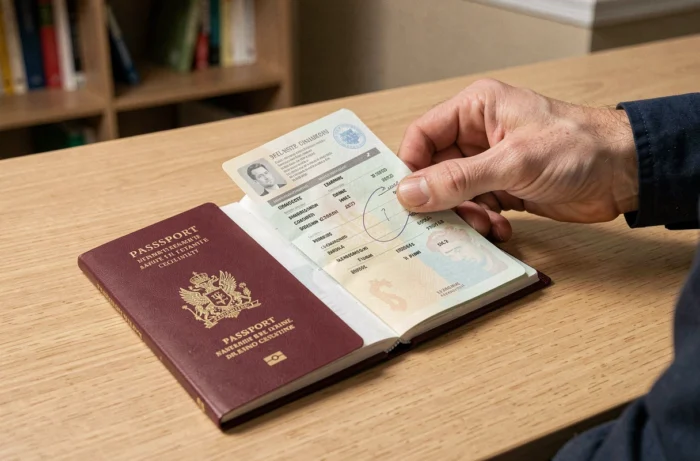
A French passport has 32 pages bound by a security stitch and integrated with an electronic chip. Removing, tearing, or cutting one of these pages is not a trivial act: French law classifies this action and has legal, administrative, and practical consequences that go far beyond a simple inconvenience at the airport.
Altered passport and criminal law: the qualification retained by the code
The biometric passport is an identity document issued by the State. As such, it benefits from the criminal protection granted to official administrative documents. The applicable offense is the degradation of a document issued by a public administration, as provided by the penal code.
Tearing out a page, even partially, constitutes a voluntary alteration of the document. The act does not need to be motivated by fraudulent intent to fall under the law. Whether the page was removed to serve as a draft, to eliminate an inconvenient stamp, or simply by claimed clumsiness, the legal outcome remains the same: the document is considered degraded.
The question of whether one can remove a page from their French passport thus receives a clear answer from a legal standpoint. The document belongs to the State, not to its holder. Its physical manipulation (page removal, homemade lamination, gluing) is prohibited.
Biometric chip and security stitch: why a missing page invalidates the passport
Beyond the law, the physical structure of the passport makes any amputation detectable and disqualifying. The RFID chip embedded in the cover stores the holder’s biometric data, as well as information about the integrity of the booklet. The automated reading systems used at borders compare the expected number of pages with the physical state of the document.

The stitch that binds the pages to the back of the booklet is part of the anti-counterfeiting system. Breaking this stitch, even on a single page, leaves visible traces: cut thread, glue residue, irregularity in the thickness of the booklet. These clues are precisely what control agents look for to detect counterfeit passports.
A passport from which a page has been removed is automatically considered non-compliant, even if the page in question was blank and unused. The issue does not concern the content of the page, but the physical integrity of the document.
Boarding refusal and border control: the concrete consequences
Airlines apply an almost zero tolerance policy towards passports with physical anomalies. The reason is contractual: the carrier transporting a passenger with a non-compliant document exposes itself to financial penalties from the authorities of the destination country.
This vigilance has been further strengthened with the implementation of the Entry/Exit System (EES), which became fully operational in the 30 participating countries on April 10, 2026. Carriers must now verify, via a dedicated interface, that the traveler meets all documentary requirements before boarding.
At major European airports (Madrid-Barajas, Barcelona-El Prat, Rome-Fiumicino, Milan-Malpensa), border authorities may refuse entry or exit from the territory if the passport shows detached pages, unreadable data, or altered protections. The fact that the document is still within its administrative validity period does not change anything.
The most common reasons for refusal related to the physical condition of the passport include:
- Torn or partially detached page, even if it contained no visa or stamp
- Cover detached revealing the chip or RFID antenna
- Pages warped by water to the point of making optical reading impossible
- Homemade lamination added to the identity page or to inner pages
The case reported by La Dépêche du Midi illustrates the concrete nature of these refusals: a traveler who tore pages from their passport to take notes was denied boarding.
Early renewal of a damaged passport: the procedure to follow
A damaged passport, whether it has lost a page or suffered accidental degradation (water, tear, animal bite), must be renewed before any travel. The process involves an online pre-application on the website of the National Agency for Secure Documents (ANTS), followed by an appointment at a town hall equipped with a biometric station.
The damaged passport must be presented at the counter when submitting the application. The agent keeps it and forwards it to the prefecture. It is not returned to the holder, unlike a passport that has simply expired and can be kept at home.
The documents required for an early renewal include:
- The damaged passport (mandatory, do not throw it away)
- A passport photo that complies with current ICAO standards
- A proof of residence dated within the last three months
- A tax stamp of the current amount
- The ANTS pre-application form with its file number
The processing time varies depending on the period and place of application. In peak season (March to June), delays can exceed several weeks in large urban areas. Planning ahead remains the only reliable strategy.
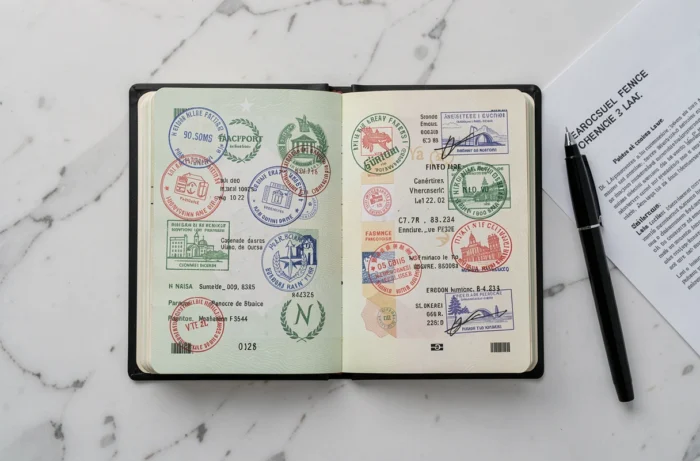
The French passport is not a personal booklet. Each page, each stitch, each security element contributes to a whole whose integrity determines its validity. Removing a page transforms a travel document into an unusable item, with a real criminal risk and the certainty of having to initiate a renewal process before being able to travel again.