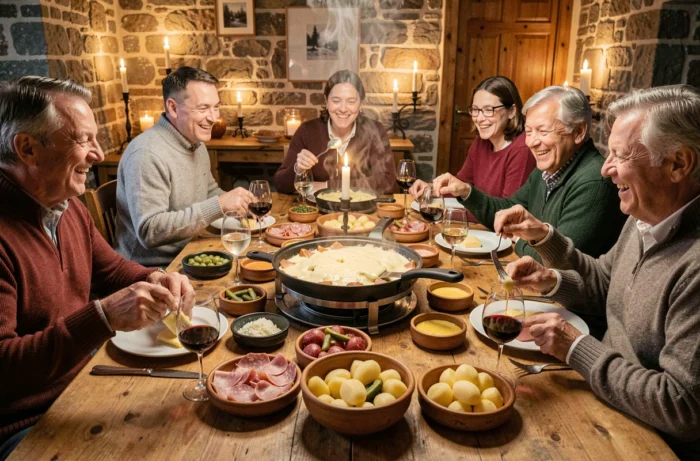
Raclette represents much more than just a simple dish of melted cheese served in winter. With an overwhelming majority of French people consuming it each year, this meal holds a unique place in French eating habits, at the intersection of a social ritual and a rapidly expanding cheese market.
Raclette cheese and cooperative sector: a structural market, not just seasonal
The popularity of raclette in winter masks a deeper phenomenon. Melted and gratin cheeses, a category that includes industrial raclette, have been increasing in volume for several years in large retail, according to analyses from Idele. This continuous rise, accelerated since 2024, goes beyond a mere winter trend.
The Sherpa Observatory of consumption trends pointed out in November 2025 that raclette is the “superstar” of cheese sales in mountain cooperative networks. Products labeled as local (raclette from Savoie, raclette from Jura) are gaining shelf space, driven by the need to consume locally and to know the origin of products.
This local positioning is not trivial. It means that raclette no longer solely depends on national brands in large retail. Cooperatives and small producers are capturing an increasing share of the value, as reported by touteslesrecettes.com while analyzing the reasons for this unanimity among the French.
Raclette, the favorite dish of young French people: a measured generational phenomenon
The survey conducted by Les Toques Françaises and UMIH Formation places raclette in a remarkable position: among those under 30, raclette ranks equally with beef bourguignon as the favorite dish. This is not just a passing fad linked to social media.
Several factors explain this generational adherence:
- The participatory format of the meal, where everyone composes their plate, aligns with a culture of personalization that those under 30 value in all areas of consumption
- The cost per guest remains moderate compared to other festive meals, making raclette accessible to student and young professional budgets
- The raclette machine functions as a social object: it imposes a shared table, a long duration, and a physical closeness that individual meals do not produce
The survey also shows that 88% of French people had at least one raclette in 2025. This proportion far exceeds that of dishes considered emblematic of French gastronomy.
Raclette machine and conviviality: why the device matters as much as the cheese
Reducing raclette to melted cheese on potatoes overlooks what makes it a unique meal. The raclette machine structures the collective dining experience in a way that no other French dish replicates.
Each guest has their own pan, chooses their accompaniments, and manages their pace. The meal naturally lasts longer than a plated dish. This mechanism creates a setting where conversation flows effortlessly, because hands are occupied and no one is waiting to be served.
Raw milk or industrial cheese: a choice that changes the outcome
The quality of the cheese radically transforms the experience. A farmhouse raclette made from raw milk offers richer flavors and a smoother melt than pasteurized industrial cheese. Specialized cheesemakers, like Sophie Michel in Maisons-Alfort, emphasize this point: raw milk brings an aromatic complexity that pasteurized cheese does not replicate.
Beyond classic raclette, variations are multiplying on the shelves. Smoked raclette, pepper or chili flavored, goat’s milk versions presented as more digestible. Some cheesemakers even recommend adding reblochon, saint-nectaire, or bleu de Gex to the pans to vary textures and flavors.

Reinvented raclette recipe: from raclette bowls to plant-based versions
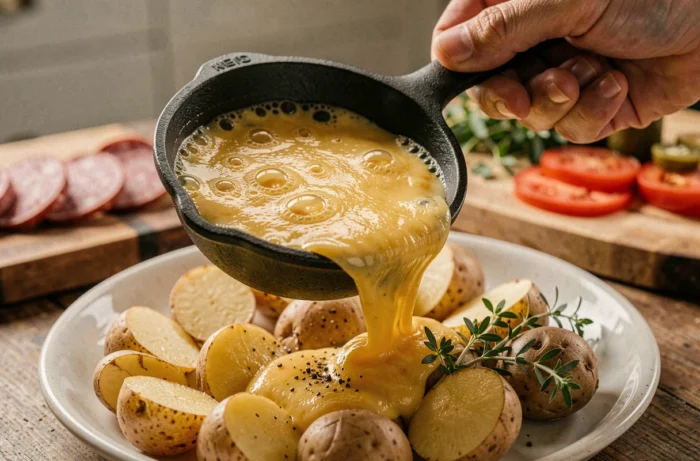
The traditional raclette (cheese, cold cuts, potatoes) remains the foundation, but variations are gaining ground. The raclette bowl, spotted in several French cities including Saint-Étienne, offers melted cheese over a base of rice or grilled vegetables, in an individual take-out format.
More colorful versions incorporate seasonal vegetables directly into the meal:
- Broccoli, mushrooms, and butternut squash cooked in the pan under the melted cheese
- Cold cuts partially replaced by slices of roasted sweet potato or grilled eggplant
- Dried fruits (walnuts, hazelnuts) added for a textural contrast with the cheese
These adaptations respond to a real demand. They allow raclette to fit into more varied diets without abandoning the fundamental principle of the meal: cheese that melts, a shared table, a slow pace.
Cheese consumption in France: raclette in an underlying trend
Raclette is not progressing in a vacuum. According to Idele, volumes of self-service cheeses are regularly increasing, while butter and liquid milk are declining. The French are buying more cheese, particularly more melting cheeses.
Mountain cooperatives are capturing this dynamic by focusing on ranges identified by their geographical origin. Raclette cheese is no longer a generic product: it becomes a marker of territory, just like a wine with designation of origin.
This evolution partly explains why raclette maintains its status as the favorite dish of the French in winter, season after season. The product is improving, the offer is diversifying, and the meal format remains perfectly suited to what consumers are looking for: a collective moment, accessible, without complex preparation.