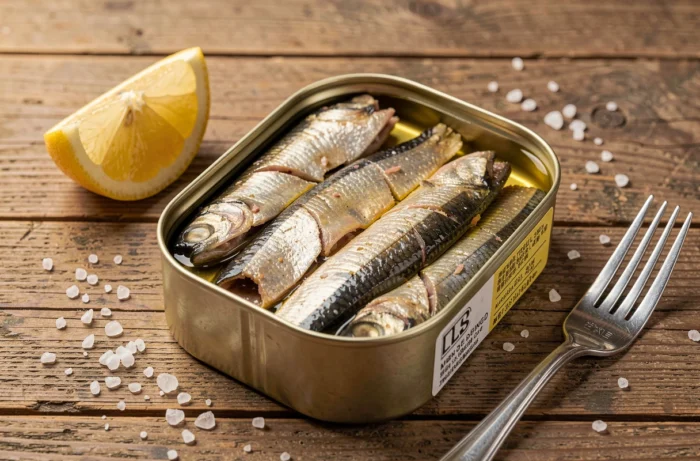
A can of sardines contains fish, oil, sometimes salt, and an inner varnish that separates the food from the metal. This varnish, the quality of the oil, and the origin of the fish determine both the nutritional profile and the risk level of each can. Understanding these parameters allows for a quick sorting at the supermarket.
PFAS and the inner varnish of sardine cans: the invisible danger
Shopping guides often compare taste or omega-3 content but overlook a recent risk factor: PFAS in food packaging. These perfluoroalkyl substances, nicknamed “forever chemicals,” can migrate from the internal varnish of the can to the fatty contents like olive oil or sunflower oil.
Since August 12, 2026, the European Union prohibits the marketing of food packaging exceeding certain strict thresholds: 25 ppb per individual PFAS, 250 ppb for the sum of PFAS measured by targeted analyses, and 50 ppm for the total content including polymeric PFAS. This regulation directly affects the varnished metal cans used for sardines.
In practical terms, brands sold in Europe must now prove the compliance of their internal varnishes. Manufacturers sourcing outside the EU and repackaging locally are also affected. For consumers, a simple guideline is to check that the product is marketed by an operator subject to European regulations, which excludes certain online purchases from third countries.
The topic of canned sardines danger and brands to favor includes this dimension often absent from classic comparisons.
Heavy metals in sardines: a lower risk than tuna
The sardine is low on the marine food chain. It feeds on plankton and small organisms, which limits the bioaccumulation of mercury in its tissues. Dietitian-nutritionist Raphaël Gruman highlights this advantage compared to tuna, which occupies a much higher trophic level and concentrates more heavy metals.
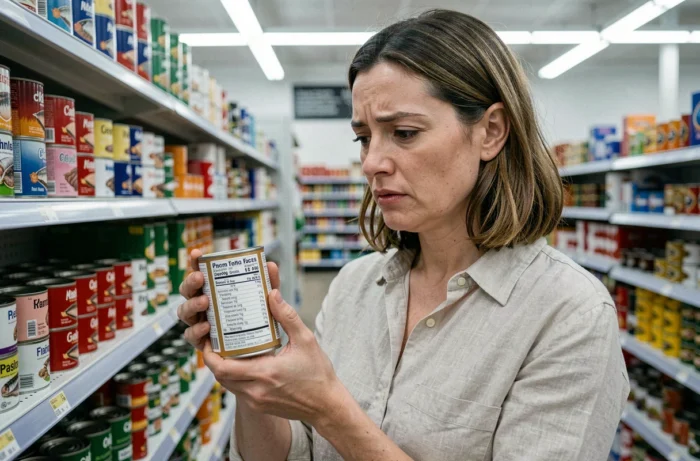
This position in the food chain does not eliminate all risk. Sardines can contain traces of cadmium or lead depending on the fishing area. The mention of the FAO area on the label (North-East Atlantic, Mediterranean, etc.) provides an indication, even if it remains broad.
Reading the fishing area on the label
The FAO area is mandatory on canned fish sold in Europe. A sardine caught in the North-East Atlantic (FAO area 27) and a sardine from the Mediterranean (FAO area 37) do not present the same potential contamination profile. Favoring an identified fishing area remains a useful reflex to limit exposure to marine pollutants.
Covering oil and preparation method: what changes the nutritional quality
The type of oil modifies the value of the final product. A sardine in extra virgin olive oil retains its omega-3 profile better than a sardine in sunflower oil, which has an unbalanced omega-6/omega-3 ratio. Some brands use rapeseed oil, which is an acceptable nutritional compromise.
The mention “pre-fried” or “pre-fried sardines” on the packaging indicates that the fish has been dipped in hot oil before being canned. This process alters some of the polyunsaturated fatty acids. Sardines simply immersed in oil without pre-frying retain more omega-3.
Here are the elements to check on the label to assess nutritional quality:
- The type of covering oil: extra virgin olive oil, rapeseed oil, or sunflower oil, in order of nutritional preference
- The presence or absence of the mention “pre-fried” or “pre-frying,” indicating additional thermal treatment
- The short ingredient list (sardines, oil, salt) without additives like flavor enhancers or added aromas
- The salt content, which varies significantly from one brand to another
Canned sardines: concrete criteria for choosing a reliable brand
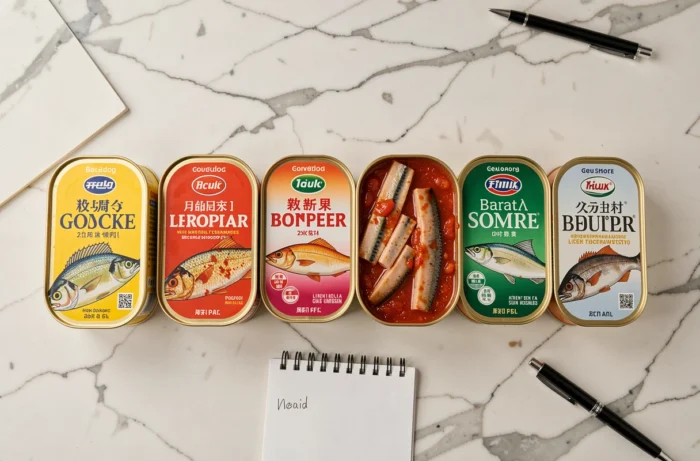
A jury of experts gathered by ELLE à table magazine evaluated several sardines in olive oil sold in supermarkets. Three brands stood out for their overall scores. This type of organoleptic test combines texture, taste, and visual appearance but does not systematically include contaminant analysis.
To go beyond just the taste criterion, several parameters must be combined:
- Compliance with the new European regulation on PFAS (packaging produced and marketed in the EU)
- Clearly indicated FAO fishing area and lot traceability
- Extra virgin olive oil without pre-frying, ingredient list reduced to three or four components
A good canned sardine is recognized as much by its packaging as by its content. The quality of the internal varnish, the type of oil, and the origin of the fish form a triptych that the label allows you to verify in a few seconds.
Price alone is not a reliable indicator. Some store brands show acceptable results in comparative tests, while premium brands may use less nutritionally interesting covering oils. Reading the ingredient list remains the most cost-effective action before placing a can in the cart.