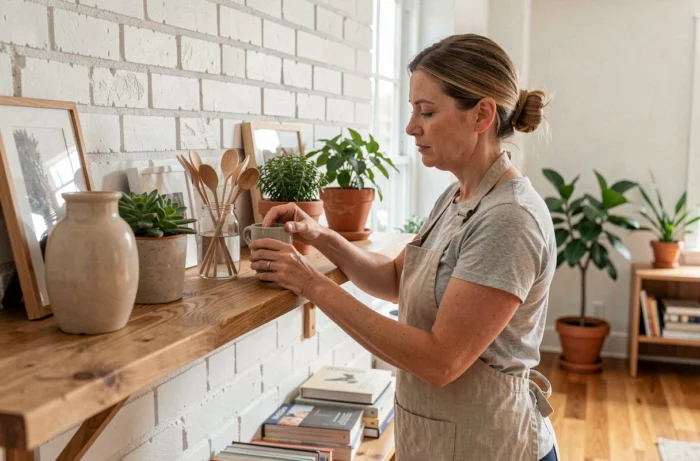
A repainted wall that peels after six months, a piece of furniture bought too large for the hallway, a limescale stain embedded in the tiles: most mistakes in a home stem from a poor order of priorities. Arranging, decorating, and maintaining your interior requires less budget than one might think, as long as you know where to focus your efforts.
Regular maintenance before major decorative work: the right sequence
You may have noticed that a well-maintained interior looks more polished than a redecorated but neglected one? In recent years, French households have postponed heavy renovation projects in favor of regular maintenance and targeted repairs. DIY superstores have also recorded a significant decline in their revenue from major projects.
This trend makes sense. Repairing before redecorating extends the lifespan of each room. A properly redone bathroom seal protects the wall for several years. A sanded and oiled floor is much cheaper than a new covering.
To find practical guides room by room, from floor to ceiling, you can rely on Mulot Bricole’s home page, which details each type of intervention.
Identifying priority repairs
Before buying any paint, take a complete tour of your home with a notebook. Note everything that is malfunctioning: a dripping faucet, a blackened electrical outlet, a sticking shutter. These small disorders, accumulated, degrade comfort much more than a mismatched wall.
- Check the silicone seals around the bathtub, shower, and kitchen sink: a cracked seal allows moisture to seep into the wall.
- Clean the ventilation grilles once or twice a year to maintain good indoor air quality and limit humidity.
- Test each door and window handle: a stuck hardware can be replaced in ten minutes with a screwdriver.
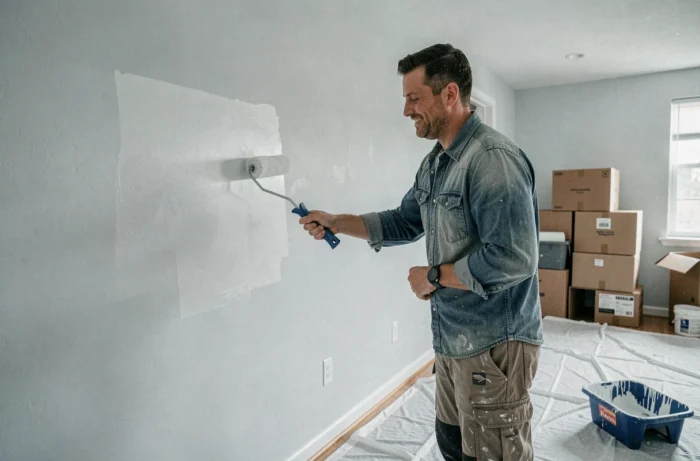
Interior layout: think in terms of circulation, not decoration
The most common mistake in layout is choosing a piece of furniture for its style and then trying to find a place for it. The result: narrow passages, doors that hit, a living room where you zigzag between obstacles.
A good layout starts from the path you take every day. From the front door to the kitchen, from the hallway to the bathroom, from the sofa to the table. Mentally trace these routes before positioning anything.
The rule of free passage
Leave at least the width of your shoulders between two pieces of furniture on a main circulation axis. In a kitchen, ensure enough space to open the oven and dishwasher at the same time without blocking the passage.
For a living room, place the sofa first, facing the source of natural light. Accent furniture (coffee table, bookshelf, console) can then fill the remaining space without obstructing the path to the door or window.
Small space: exploit verticality
In a small room, the floor is a rare resource. Fix wall shelves between 1.40 m and 1.80 m high to store books, plants, or decorative objects. Above 1.80 m, reserve storage for items you use rarely (suitcases, winter blankets).
A low and deep piece of furniture takes up more floor space than a narrow and tall column. Prioritizing vertical storage frees up floor circulation.
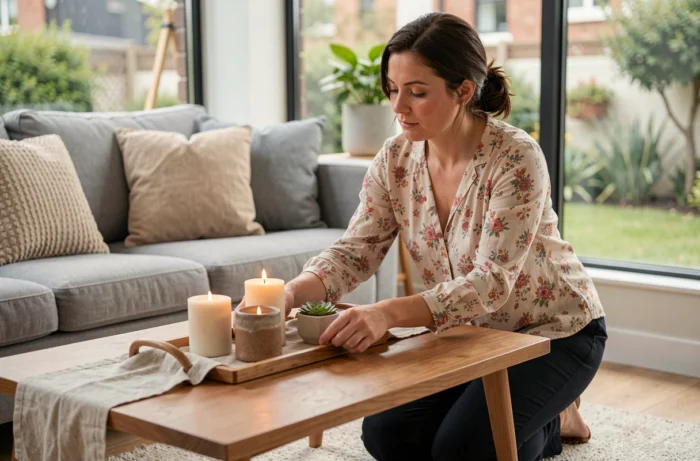
Interior decoration: choose a limited palette and stick to it
Why do some interiors seem harmonious at first glance? Often because they limit themselves to three colors. A dominant shade (walls, floor), a secondary shade (main furniture, curtains), and an accent shade (cushions, frames, vases).
This principle, known as the 60-30-10 rule by decorators, avoids visual overload. It works in any room, from the living room to the bathroom.
Light changes everything
The same color appears warm under a 2,700 K bulb and cold under a 5,000 K neon. Before repainting, test a sample on the wall and observe it at different times of the day. Many disappointments in decoration come from a color choice made in-store, under intense artificial lighting.
Multiply light sources rather than increasing their power. A single ceiling light creates harsh shadows. Add a reading lamp near the sofa, a LED strip under a tall kitchen cabinet, a wall sconce in the hallway. Each light point softens the overall atmosphere.
Home maintenance: actions that prevent heavy chores
Store brands in DIY and maintenance now account for over 40% market share in France. In other words, it is no longer necessary to buy a premium brand product to achieve a decent result. What matters more is consistency.
Three habits that change the workload
Cleaning a warm stovetop takes thirty seconds. Letting splatters dry and then scraping the next day takes ten minutes. This delay, multiplied by every surface in the house, explains why some households spend their Sundays scrubbing.
- Wipe down kitchen surfaces immediately after each meal, before the grease hardens.
- Run a squeegee over the shower wall when you exit: limescale doesn’t have time to settle.
- Ventilate each room for at least ten minutes a day, even in winter, to reduce ambient humidity and limit the appearance of mold.
Regular maintenance costs less than undergoing renovation. A faucet descaled every month lasts much longer than a faucet cleaned once a year with concentrated vinegar, which eventually damages the chrome.

Arranging, decorating, and maintaining a home boils down to three reflexes: repair what is malfunctioning before redecorating, organize the space around your actual movements, and intervene often rather than for long periods. A pleasant interior is not one that follows the latest trend, but one where every daily action is done without friction.