
When returning home from the maternity ward with a newborn, the priority is not to check off a shopping list. It’s to understand what unfolds in the first weeks: fragmented sleep, on-demand feeding, crying without apparent cause. The baby universe is not just about equipment; it relies on concrete markers that young parents can establish from the very first days.
Babywearing: position and minimum age before facing the world
The baby carrier is often set up in a forward-facing mode from birth, thinking it stimulates awareness. Current recommendations remind us that forward-facing carrying should only begin around five months, once head control is well established.
You may also like : Everything You Need to Know About Semi-Buried Basements: Features and Design Tips
Before this age, the neck, spine, and hips are not ready to support this orientation. The recommended position remains parent-facing carrying, in a so-called “frog” posture: knees raised above the hips, rounded back, head supported.
There are many references for choosing a suitable ergonomic baby carrier on the Petits Bambins website dedicated to babies, with markers by age group. Feedback varies on this point according to models, but the non-negotiable criterion remains the maintenance of the infant’s natural back curvature.
Read also : Everything You Need to Know About VAT Liability: Definition and Implications for Businesses
- From birth to five months: parent-facing carrying only, in frog position, with a fabric or carrier that supports the head.
- From around five months: forward-facing becomes feasible for short periods, if the baby holds their head without assistance.
- In all cases: ensure that the knees remain higher than the buttocks and that the fabric properly supports the thighs up to the knee crease.
Additional birth leave in 2026: what changes for young parents
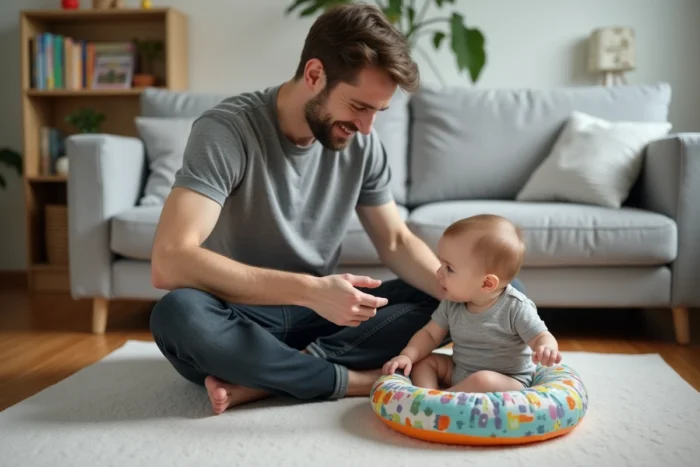
As of July 1, 2026, a new additional birth leave has come into effect in France. It applies to each parent, whether they are an employee, self-employed, public agent, or military. This provision does not replace maternity leave, paternity leave, or parental leave; it adds to them.
Specifically, each parent can take one to two months of additional paid leave, within nine months after the birth or arrival of the child in the household. The compensation reaches 70% of income in the first month, then 60% in the second. This leave also opens rights to retirement.
Up to four months of parental presence per child
If both parents use their two months each, one child can benefit from four months of paid parental presence in addition to existing leaves. For a couple, this changes the game regarding the organization of the first months: a relay between the two parents can be considered without going through reduced-rate parental leave.
The legal framework is based on the LFSS 2026 and the decrees of May 30, 2026. Check with your employer or your fund for the application procedures, as notice periods vary depending on status.
Infant sleep: room temperature and safe environment
The temperature of the baby’s room is a parameter that is often underestimated. The recommendation remains to keep the room between 18 and 20 degrees. Beyond that, the risk of overheating increases, especially if the infant is dressed warmly or covered with a thick sleeping bag.
A firm mattress, without a pillow, duvet, or bumper: this is the foundation of a safe sleeping arrangement. We repeat this because products sold in stores (positioning pillows, thick sleeping bags, bed reducers) perpetuate confusion.
Managing dry air in winter
In a heated home, dry air can irritate the infant’s respiratory tract. A humidifier helps stabilize the humidity level in the room. Before buying one, you can simply place a bowl of water on the radiator and observe if symptoms (stuffy nose, dry cough) decrease.
Feeding and diversification: concrete markers by age group
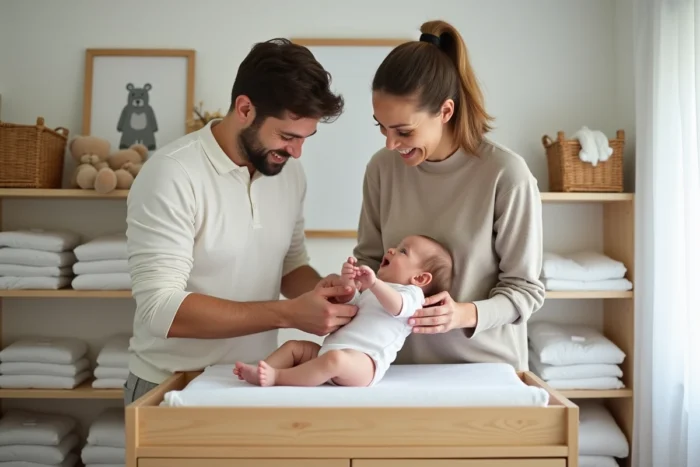
Breastfeeding or formula covers exclusive nutritional needs until four to six months. Food diversification begins with cooked and pureed vegetables, introduced one by one, to identify any potential allergic reactions.
Introducing only one new food every two to three days allows for identifying the cause in case of skin or digestive reactions. It often starts with carrots, zucchini, or sweet potatoes, which are well tolerated by most infants.
Textures and chunks: don’t wait too long
By eight to nine months, if too much time is spent on smooth purees, the baby may develop a resistance to textures. Transitioning to melt-in-the-mouth pieces (mashed banana, well-cooked pasta, steamed broccoli) encourages chewing and autonomy at the table.
- Four to six months: cooked pureed vegetables, one food at a time.
- Six to eight months: addition of fruits, infant cereals, first proteins (meat or fish pureed in small amounts).
- Eight to twelve months: increasingly coarse textures, melt-in-the-mouth pieces, beginning of shared family meals.
The baby universe is built around simple gestures repeated regularly. The new birth leave gives parents a bit more time to lay these foundations, and ergonomic carrying protects postural development from the very first weeks. Two markers that, when combined, change the quality of the first months much more than any accessory.