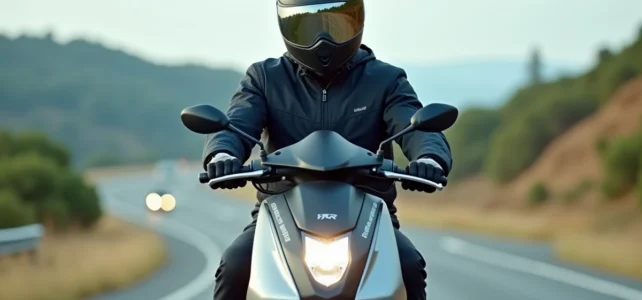
A 125 scooter is legally allowed on the highway as long as it exceeds 80 km/h. The issue is not the right to ride there, but the actual ability to ride safely and without straining the mechanics. Most 125s reach their maximum speed between 100 and 115 km/h, which leaves almost no margin for overtaking or merging onto a fast lane. This is where the choice of model becomes technical.
Power reserve and engine speed: the criteria that buying guides ignore
A 125 that shows a top speed of 110 km/h operates on the highway between 90 and 95% of its maximum RPM. At this level of demand, the engine heats up more, fuel consumption increases, and the mechanics age faster. We observe that most negative feedback on forums specifically concerns this engine fatigue, not a design flaw.
You may also like : How to Choose the Ideal Harness for Your Golden Retriever: Tips and Tricks
The parameter to monitor is not raw power but the torque available in the mid-range RPM. A 125 single-cylinder with good torque at mid-range allows for maintaining a stabilized speed without the engine screaming constantly. Four-valve liquid-cooled engines offer better thermal efficiency at high RPM than air-cooled architectures.
Before choosing, the question to ask is which 125 scooter to choose for the highway based on the actual share of highway in your daily trips. A GT model with a well-torqued engine handles fast sections better than a compact urban scooter, even with the same displacement.
Recommended read : How to Choose the Best Hairdresser for Color and Highlights in Capbreton
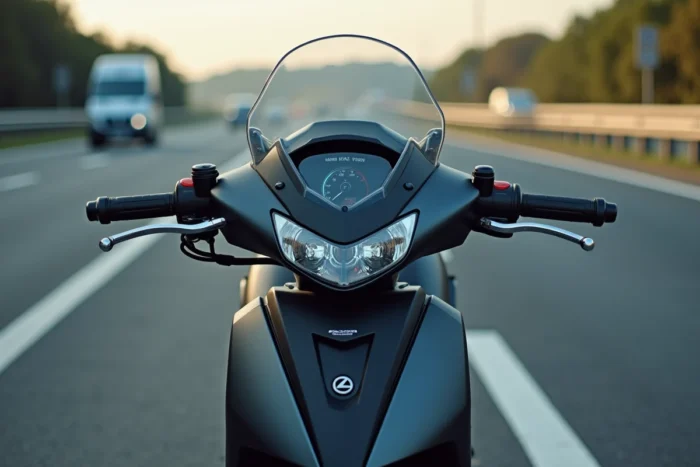
125 GT or urban scooter: what the category changes on the highway
125 scooters are divided into two distinct families for this use. GTs (like the Honda Forza 125, Kymco DownTown 125, or Yamaha XMAX 125) come with larger diameter wheels, a long wheelbase, and a lower seat relative to the center of gravity. This geometry provides a significantly higher stability beyond 90 km/h.
Urban scooters, with small diameter wheels and a short chassis, become twitchy at high speeds. Lateral turbulence caused by heavy vehicles amplifies this phenomenon. On a daily highway trip, this instability turns into real physical fatigue.
Discriminating criteria for regular highway use
- Wheel diameter: a 15-inch front and a 14-inch rear filter road irregularities better at high speeds than a 13/12-inch combination
- Standard windscreen or fairing: aerodynamic protection reduces pressure on the torso and limits neck fatigue on long stretches
- ABS braking: on wet highways, a dual-channel ABS system is not a luxury but a necessity, especially with the limited maneuverability of a 125
- Dry weight: a scooter that is too light (under 130 kg) will be more sensitive to lateral air movements, while a model around 150-160 kg offers better stability
Mechanical fatigue and maintenance: the highway wears a 125 differently
A 125 used daily on the highway ages faster than in urban use. The engine constantly operates at the high end of its range, the transmission (variator, belt, rollers) endures continuous load, and the oil degrades more quickly at high temperatures.
We recommend shortening the oil change intervals compared to the manufacturer’s recommendations. Checking the oil level every two weeks and monitoring the variator belt tension at close intervals helps avoid unpleasant surprises. The variator rollers, often neglected wear parts, deteriorate faster when the engine remains at a constant high RPM.
Tire pressure also deserves increased attention. An under-inflated tire at 50 km/h in the city is a minor discomfort. At 100 km/h on the highway, it poses a real risk of losing grip in a curve or in the rain.
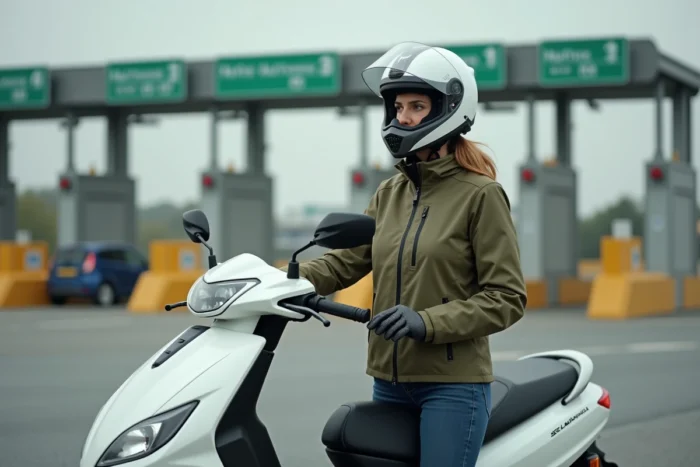
Should you stay with a 125 or switch to a maxi-scooter for the highway
The question deserves to be asked frankly. Some technical sources recommend a minimum of 400 cm³ for frequent highway use, with models like the Piaggio MP3 500 or the Kymco CV3. These machines have a power reserve that transforms the experience: serene overtaking, stress-free merging, moderate engine speed at stabilized speeds.
The additional cost is not negligible. A maxi-scooter consumes more, costs more to purchase and maintain, and requires an A2 license (or an equivalent). For a home-to-work trip where the highway portion is only about ten kilometers, a good 125 GT remains a reasonable compromise. Beyond that, the cost/comfort/safety ratio shifts in favor of a larger displacement.
Threshold points to evaluate
- Daily highway distance: under 15 km one way, a well-maintained 125 GT holds the road. Beyond that, mechanical and physical fatigue weighs in
- Frequency: occasional weekend use does not stress the engine like five round trips a week
- Total budget: include the additional maintenance costs of a 125 pushed to its limits in the calculation, not just the purchase price
The 125 scooter on the highway works, provided you choose a GT model with large wheels, ABS, and accept a tighter maintenance schedule than normal. If the fast portion exceeds twenty kilometers per day, switching to a larger displacement is no longer a whim but a rational decision.